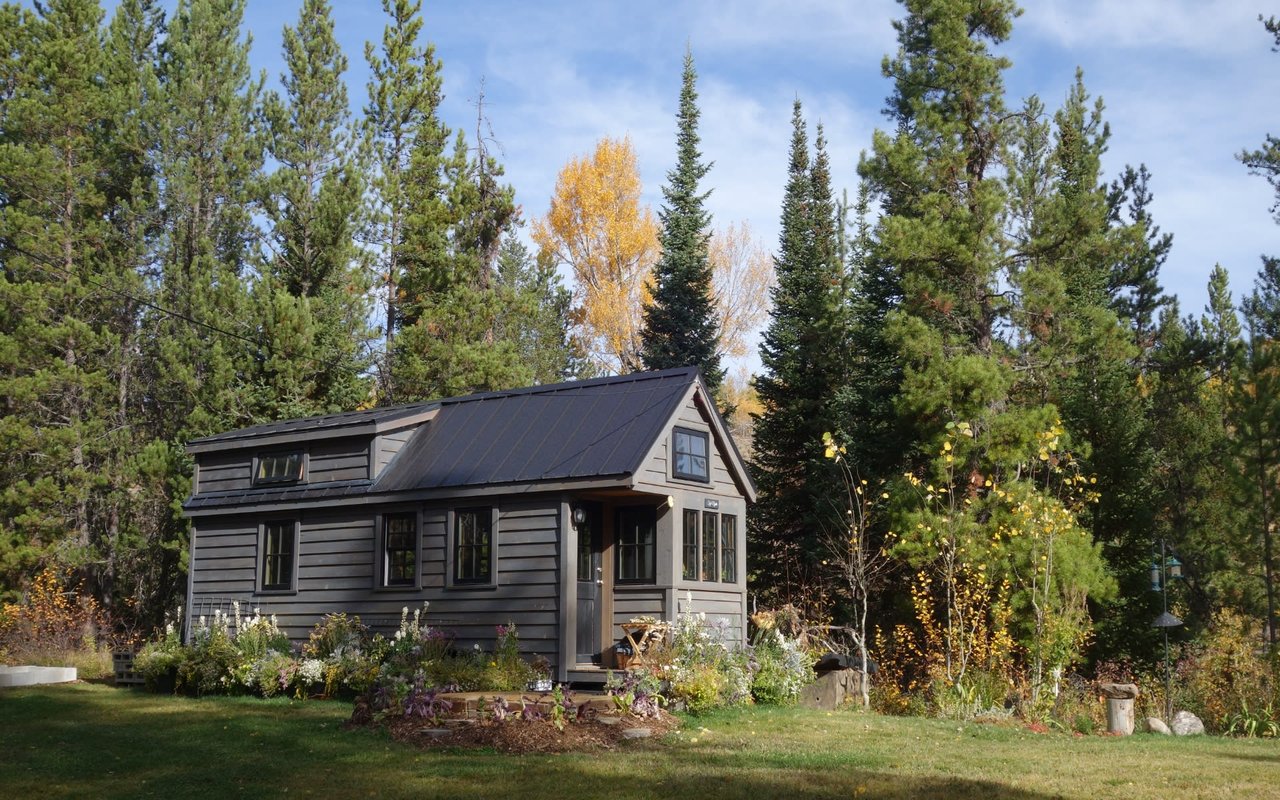
When buying a home in Colorado’s Wildland-Urban Interface (WUI), the biggest hurdle often isn't securing a mortgage or winning a bidding war—it's securing home insurance. In these high-risk fire zones, the central question for buyers shifts dramatically from "How much will coverage cost?" to "Is coverage even available?"
Understanding how insurers assess wildfire risk, what new Colorado laws protect you, and how to navigate your market options can save your home purchase from falling through at the closing table.
What Drives Wildfire Risk Scores?
Insurance carriers do not rely on standard public wildfire maps or county WUI designations to underwrite a policy. Instead, they use proprietary, carrier-specific algorithms to calculate a wildfire risk score for every address.
Underwriters evaluate three primary layers of risk:
- Regional Terrain & Vegetation: Surrounding topography, elevation, slope, and local fuel sources.
- Community Mitigation: Firewise USA® status, localized forest management, and community-wide defense measures.
- Property-Specific Construction: Home hardening features (e.g., Class A fire-rated roofing, ember-resistant vents) and defensible space around the perimeter.
Because every carrier uses a different scoring model, a property declined by one insurer might be accepted by another—making thorough investigation essential.
What Colorado WUI Homebuyers Must Investigate
A home can be structurally sound, beautifully finished, and fully approved for a mortgage, yet still face an insurance-placement crisis. To prevent last-minute closing delays, buyers should investigate coverage options as soon as a property becomes a serious candidate.
Key Questions to Ask Insurance Carriers:
- Risk Scoring: Does the carrier use a wildfire risk score for this address? What score was assigned, and what specific features drove that rating?
- Impact on Terms: Did the wildfire score affect policy eligibility, the premium amount, the deductible, or all three?
- Mitigation Discounts: What documented property or community mitigation steps does the carrier recognize for credit?
- Appeals: Is there a formal process to appeal inaccurate data regarding roof age, vegetation density, or cleared defensible space?
- Bindability: Will coverage be fully underwritten and bindable well before the closing date?
- Alternative Options: If standard admitted carriers decline the property, what specialty, surplus lines, or state-backed options exist?
Understanding Your Insurance Market Paths
If standard homeowners insurance isn't an option, buyers must navigate alternative market pathways:
Market Path | Typical Role | Consumer Caution |
Admitted Standard | Primary homeowners market | Carrier eligibility varies widely by address and risk score. |
Admitted Specialty | Handles higher/more restrictive risks | Coverage terms may be more limited; wildfire deductibles are often higher. |
Surplus Lines | Non-admitted carriers accepting risks declined by standard markets | Policy forms, rates, and consumer protections differ from the admitted market. |
Colorado FAIR Plan | Insurer of last resort | Requires proof of multiple carrier declinations; offers limited coverage. |
The Colorado FAIR Plan Benchmark
For properties facing widespread market rejections, the Colorado FAIR Plan serves as a vital safety net. However, buyers should understand its limitations:
- Eligibility: Generally requires documentation of three official insurer declinations.
- Residential Coverage Limit: Capped at $750,000 for combined property and contents.
- Valuation Basis: Settles claims based on Actual Cash Value (ACV) rather than full replacement cost.
- Coverage Scope: Offers basic named-peril property protection. Liability or broader coverage gaps may require a separate Difference in Conditions (DIC) policy.
- Binding Moratoriums: Carriers may suspend binding new policies if an active wildfire threatens the area or an evacuation order is issued.
Colorado Law & Consumer Protection (HB25-1182)
Effective July 1, 2026, Colorado House Bill 25-1182 increases transparency for consumers buying in high-risk zones. The law mandates that applicable insurers using wildfire risk scoring must provide specific disclosures and account for mitigation efforts.
What HB25-1182 Means for Colorado Buyers:
- Right to Your Score: You can request and receive the specific wildfire score or classification assigned to your prospective home.
- Context & Position: Insurers must explain where your property falls within their overall risk score range.
- Transparency: Insurers must identify the key property and environmental features driving your score.
- Mandated Mitigation Recognition: Insurers are required to recognize specified property- and community-level mitigation (such as home hardening or defensible space) through policy discounts or eligibility considerations.
- Formal Appeal Process: Consumers gain a clear right to challenge and correct inaccurate property data used in scoring.
The Fine Print: Understanding Percentage Deductibles
In WUI zones, insurers frequently apply percentage-based catastrophe deductibles specifically for wildfire claims, rather than standard flat-dollar amounts ($1,000 or $2,500).
For a home with a $600,000 Coverage A (Dwelling) limit, here is how a percentage deductible impacts your out-of-pocket costs during a claim:
1% = $6,000
2% = $12,000
5% = $30,000
Always verify these figures with your lender to ensure a high deductible doesn't violate your loan terms.
Essential Documents to Collect Before Closing
To secure bindable coverage smoothly, gather the following documentation early in your purchase process:
- Roof Documentation: Installation date, materials used, Class A fire-rating proof, and inspection records.
- Mitigation Records: Defensible space completion records, Firewise community certifications, or professional wildfire assessment reports.
- Carrier Risk Report: Written documentation of the wildfire score and specific mitigation recommendations from the carrier.
- Bindable Proposal: A finalized proposal confirming dwelling limits, percentage deductibles, roof terms, and explicit lender approval.
Key Takeaway: Treat insurance as a primary contract contingency. Investigate coverage constraints the moment a WUI property becomes a candidate—not after earnest money is locked in.
Verified Sources & Legal References
- Colorado Division of Insurance
- Colorado Legislative Acts: HB23-1174, HB23-1288, HB25-1182, SB26-155
- Colorado State Forest Service & Colorado FAIR Plan
- Jefferson County & Douglas County WUI Planning Records